5 Signs Your Child May Need Speech Therapy
“Is my child’s speech developing normally?”
If you’ve found yourself asking this question, you’re not alone.
Maybe your child understands everything you say but uses very few words. Maybe you understand them perfectly, but other people often ask, “What did they say?” Or perhaps they get upset because they know what they want but cannot find the words to tell you.
These moments can leave parents wondering whether to wait a little longer or seek professional help.
Every child develops differently. But when communication difficulties continue or start affecting your child's everyday life, it is worth paying attention.
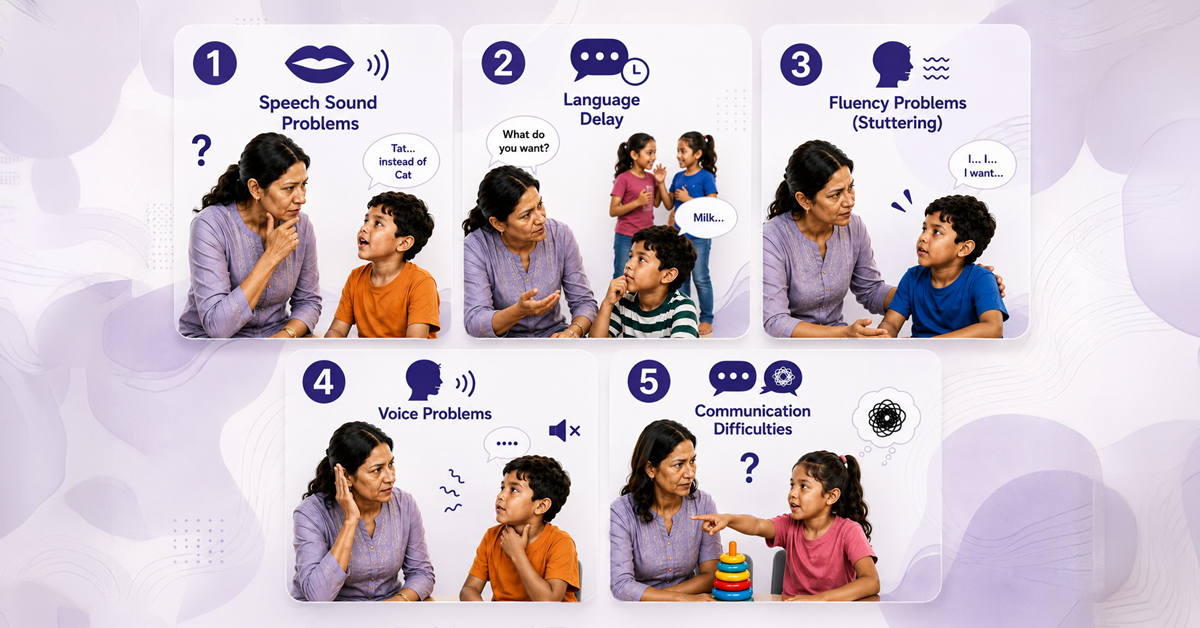
Here are 5 signs that may mean your child could benefit from a speech and language assessment.
1. Your Child Is Talking Less Than You Expected
You don't need to compare your child with every other child at the playground.
Instead, look at their own progress.
Is your child learning new words? Are they beginning to combine words? Are they finding new ways to tell you what they want?
You may want to seek professional advice if your child:
Uses very few words for their age
Rarely combines words into phrases
Relies mostly on pointing, gestures, or sounds
Has stopped adding new words to their vocabulary
Finds it difficult to tell you what they want or need
Being a late talker does not automatically mean your child has a speech or language disorder. Some children do catch up.
The concern is when your child seems stuck, and you aren't seeing meaningful progress.
A speech-language professional can help you understand where your child is in their communication development, rather than leaving you wondering whether you should wait.
2. You Understand Your Child, But Other People Don't
This is something many parents notice first.
You might understand exactly what your child is saying because you've heard their speech every day. But when a teacher, relative, doctor, or another child struggles to understand them, your child may start feeling frustrated.
You may notice things like:
Sounds being left out of words
One sound being replaced with another
Words being pronounced differently each time
People frequently ask your child to repeat themselves
Your child becoming upset when others don't understand them
Some speech sound mistakes are a normal part of growing up.
But if your child's speech is consistently difficult to understand for their age, a speech therapist can assess their speech sounds and identify what may be making communication difficult.
The goal isn't to make your child speak “perfectly.”
It's to help them be understood more easily and communicate with confidence.
3. Your Child Doesn't Always Understand What You Say
Here's something parents sometimes overlook:
Communication isn't only about speaking.
Your child also needs to understand language.
For example, imagine you say:
“Take your shoes to your room and then bring your school bag.”
If your child regularly struggles with instructions like this, even when they appear to be listening, they may be having difficulty understanding or processing language.
You may also notice that your child:
Doesn't understand simple questions
Struggles with new words
Has difficulty following instructions
Finds stories difficult to follow
Doesn't understand what is being asked of them
Needs the same instruction repeated several times
This doesn't necessarily mean your child is being stubborn or isn't paying attention.
Sometimes, the language itself is difficult for them to understand.
A speech-language assessment can look at both understanding and expression to identify where your child may need support.
4. Your Child Knows What They Want to Say, But Can't Say It
Imagine knowing exactly what you want, but not having the words to explain it.
For a child, that can be incredibly frustrating.
You may see your child pointing at things, pulling you towards what they want, using the same few words repeatedly, or becoming upset when you don't understand.
Other signs can include:
Difficulty finding the right words
Using very short sentences
Struggling to answer questions
Finding it difficult to describe what happened
Difficulty telling a simple story
Becoming frustrated when trying to communicate
For example, your child may come home from school excited about something that happened but be unable to explain it.
They may know the whole story in their head.
The problem is getting that story into words.
Speech and language therapy can help children build vocabulary, sentence skills, and the ability to express their thoughts more clearly.
5. Your Child Avoids Talking or Repetitions about being frustrated While Communicating
Sometimes the biggest sign isn't a speech error at all.
It's a change in your child's behaviour.
A child who repeatedly struggles to communicate may start avoiding situations where they have to speak.
You might notice that they:
Get upset when people don't understand them
Avoid answering questions
Become unusually quiet around others
Prefer pointing instead of speaking
Avoid conversations with other children
Lose confidence when speaking
Become frustrated during everyday communication
If your child wants to communicate but keeps running into the same difficulty, don't ignore that frustration.
Communication should feel like a connection, not a constant struggle.
What If Everyone Says, “They'll Catch Up”?
This is probably one of the hardest things for parents to hear.
You mention your concern, and someone says:
“Don't worry. My child started talking late too.”
And sometimes, they are right. Children do develop at different rates.
But your child's development is not the same as someone else's.
If you have noticed that your child is struggling, isn't making progress, or has lost skills they previously had, getting professional advice doesn't mean you're overreacting.
It simply means you want to understand what's happening.
An assessment is not a label. It's information.
And having information gives you better options.
Does Being Bilingual Cause Speech Delay?
It's variable for children to children
Speaking two or more languages does not cause a speech or language disorder.
If your family uses multiple languages at home, continue speaking with your child in the language or languages you are most comfortable using.
When concerns exist, a qualified professional should consider the child's overall communication rather than looking at only one language.
When Should You Consider Speech Therapy?
You don't have to wait until your child's communication difficulties become severe.
Consider speaking with a speech-language professional if you notice that your child:
Is consistently behind expected communication milestones
Is difficult for others to understand
Has trouble following instructions or understanding questions
Struggles to express their needs or thoughts
Isn't making noticeable communication progress
Frequently becomes frustrated while communicating
Avoids speaking or social interaction
Has lost communication skills they previously had
If you're unsure, that's okay.
You don't need to diagnose your child yourself.
That's what an assessment is for.
What Happens During a Child's Speech Assessment?
Many parents worry that an assessment will feel like a test their child has to “pass.”
It shouldn't.
A Speech-Language Pathologist looks at how your child communicates in an age-appropriate way. Depending on the child's age and needs, this may include looking at:
How they understand language
How they express themselves
Their vocabulary
Sentence formation
Speech sounds
Fluency
Social communication
How they communicate during play and interaction
The aim is to understand your child's strengths as well as their challenges.
From there, the therapist can recommend whether speech therapy is appropriate and what areas should be worked on.
What Can Parents Do at Home?
You don't need expensive toys or complicated activities to encourage communication.
Some of the most useful opportunities happen during ordinary moments.
Talk about what you're doing
While cooking, bathing, getting dressed, or travelling, talk about what you see and do.
“We're putting on your blue shoes.”
“The dog is running.”
Simple conversations give children opportunities to hear language naturally.
Read together
Don't worry about finishing every page.
Talk about the pictures. Ask what your child sees. Let them point, answer, guess, and tell you what they think might happen next.
Give them time to respond
If you ask a question, give your child a moment to think.
Don't immediately answer for them.
That small pause can give them the opportunity they need to communicate.
Build on what they say
If your child says:
“Car.”
You can say:
“Yes! A big red car.”
You're not correcting them. You're simply showing them how their idea can become a bigger sentence.
Make communication enjoyable
The goal isn't to turn every interaction into a therapy session.
Talk. Play. Read. Listen.
Children learn communication best when communication feels meaningful.
Early Support Can Give You Clarity
There is no need to panic if your child isn't talking exactly like another child their age.
But there is also no benefit in ignoring a concern that keeps coming back.
If you've been thinking:
“Something doesn't seem right, but I'm not sure what.”
That's a good enough reason to ask a professional.
A speech and language assessment can help you understand your child's communication skills, identify areas that may need support, and give you a clearer path forward.
The goal of speech therapy isn't simply to teach a child more words.
It's to help them express themselves, understand others, participate in everyday life, and feel confident communicating.
Looking for Speech Therapy for Your Child in Pune?
At SynapCare Rehabilitation Center, we understand that every child communicates differently.
Our speech and language support is tailored to the child's individual needs, whether the concern involves delayed speech, unclear speech, difficulty understanding language, difficulty expressing thoughts, or challenges with everyday communication.
If something about your child's communication has been worrying you, you don't have to figure it out alone.
A professional assessment can be a simple first step toward understanding what your child needs.
Talk to SynapCare Rehabilitation Center about a speech and language assessment for your child.