Cochlear Implant & Speech Therapy for Children | SynapCare Rehabilitation
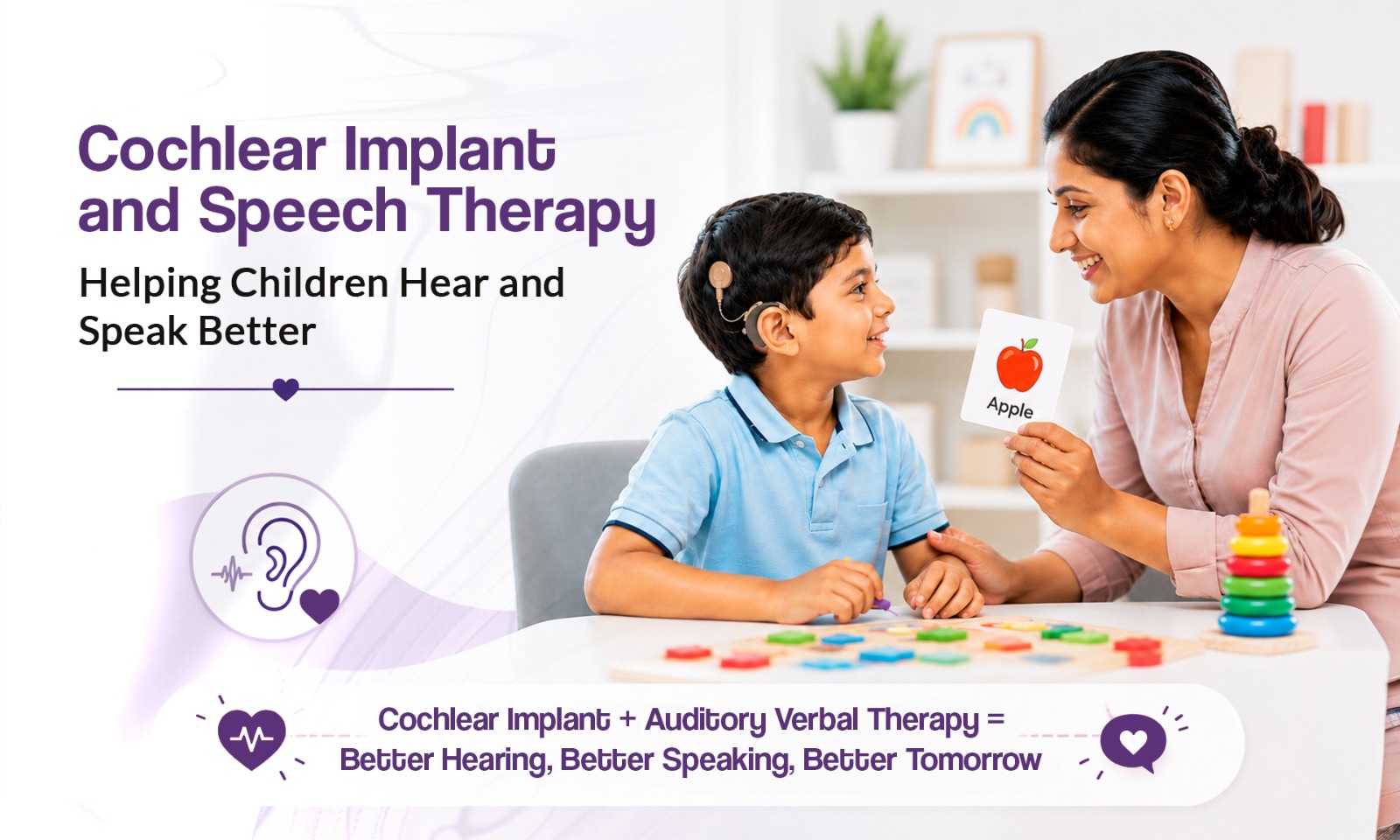
For many parents, hearing their child say “Mama” or “Papa” is a special moment. But children with severe hearing loss may face difficulty in listening, understanding speech, and communicating clearly.
A Cochlear Implant (CI) helps children hear sounds, but hearing sounds alone is not enough. Children also need speech therapy to understand words, improve speech, and communicate confidently in daily life.
We provide specialized cochlear implant rehabilitation and speech therapy programs to help children build better listening and communication skills.
How Hearing Loss Can Affect a Child
When a child cannot hear properly, it can affect many areas of development.
Common Difficulties Children May Face:
Delayed speech and language
Difficulty understanding instructions
Poor classroom participation
Communication problems
Reduced social interaction
Low confidence
Frustration while expressing needs
Learning difficulties
Example:
A child may:
Not respond when called by name
Speak very few words for their Reduced vocabulary
Avoid talking with others
Increase the TV or mobile volume too much
Sometimes children become quiet, frustrated, or socially isolated because they struggle to hear and communicate properly.
Early support can make a major difference.
What Is a Cochlear Implant?
A Cochlear Implant is a small electronic device used for children with severe hearing loss.
Unlike hearing aids that mainly make sounds louder, a cochlear implant sends sound signals directly to the hearing nerve.
This helps children:
Hear environmental sounds
Recognize speech
Improve listening skills
Develop spoken language
Example:
After cochlear implant activation, a child may hear:
Doorbells
Parent’s voice
School sounds
Music
Animal sounds
often for the first time.
But understanding these sounds still requires therapy and practice.
Why Auditory Verbal Therapy Is Important After a Cochlear Implant
Many parents think children will start speaking automatically after cochlear implant surgery. But the implant helps children hear sounds that the brain still needs to learn what those sounds mean.
Simple Example:
It is similar to hearing a new language for the first time. You hear sounds clearly, but understanding and speaking the language takes practice.
AVT and AT therapy help children:
Understand speech
Improve pronunciation
Build vocabulary
Learn sentence formation
Communicate confidently
Without therapy, children may continue struggling with communication even after implantation.
What We Do at SynapCare Rehabilitation Center
We provide personalized therapy programs based on each child’s hearing and communication needs.
Our Therapy Focus Includes:
Listening Skill Development
We help children identify and understand sounds.
Speech Improvement
We work on pronunciation, word clarity, and speech production.
Language Development
We help children learn words, sentence building, and daily communication.
Auditory Verbal Therapy
We train children to use listening as the main way to develop spoken language.
Parent Guidance
We teach parents simple home activities to support daily speech and listening practice.
Simple Therapy Examples
Sound Awareness and recognition
The therapist may use:
Bell sounds
Clapping
Animal sounds
to improve sound recognition.
Speech Practice
If a child says:
“Tar” instead of “Car”
The therapist practices correct sound production step by step.
Language Building
A child who says:
“Water”
may gradually learn:
“I want water.”
This improves everyday communication.
Benefits of Cochlear Implant AVT and AT Therapy
With regular therapy and family support, many children improve in:
Listening skills
Speech clarity
Vocabulary
Social interaction
School participation
Communication confidence
Example:
Children who once struggled to communicate may gradually:
Speak clearly
Answer questions confidently
Interact better with teachers and friends
Express emotions and needs properly
Why Families Choose SynapCare Rehabilitation Center
Families trust SynapCare because we provide:
Personalized therapy sessions
Child-friendly activities
Structured auditory verbal therapy
Speech and listening rehabilitation
Parent counseling and support
Caring and professional rehabilitation services
Our goal is to help every child communicate more confidently and independently.
Give Your Child the Right Support
A cochlear implant can help children hear sounds, but speech therapy helps them understand, speak, and communicate effectively in real life.
Early therapy can create life-changing improvements in communication, learning, and confidence.
Visit SynapCare Rehabilitation Center, Aundh, Pune, to learn more about our cochlear implant rehabilitation and speech therapy programs.
Book a consultation today and support your child’s listening and speech development journey.