Is Your Child Hearing but Not Understanding? How AVT/AT Therapy Can Change Communication Skills
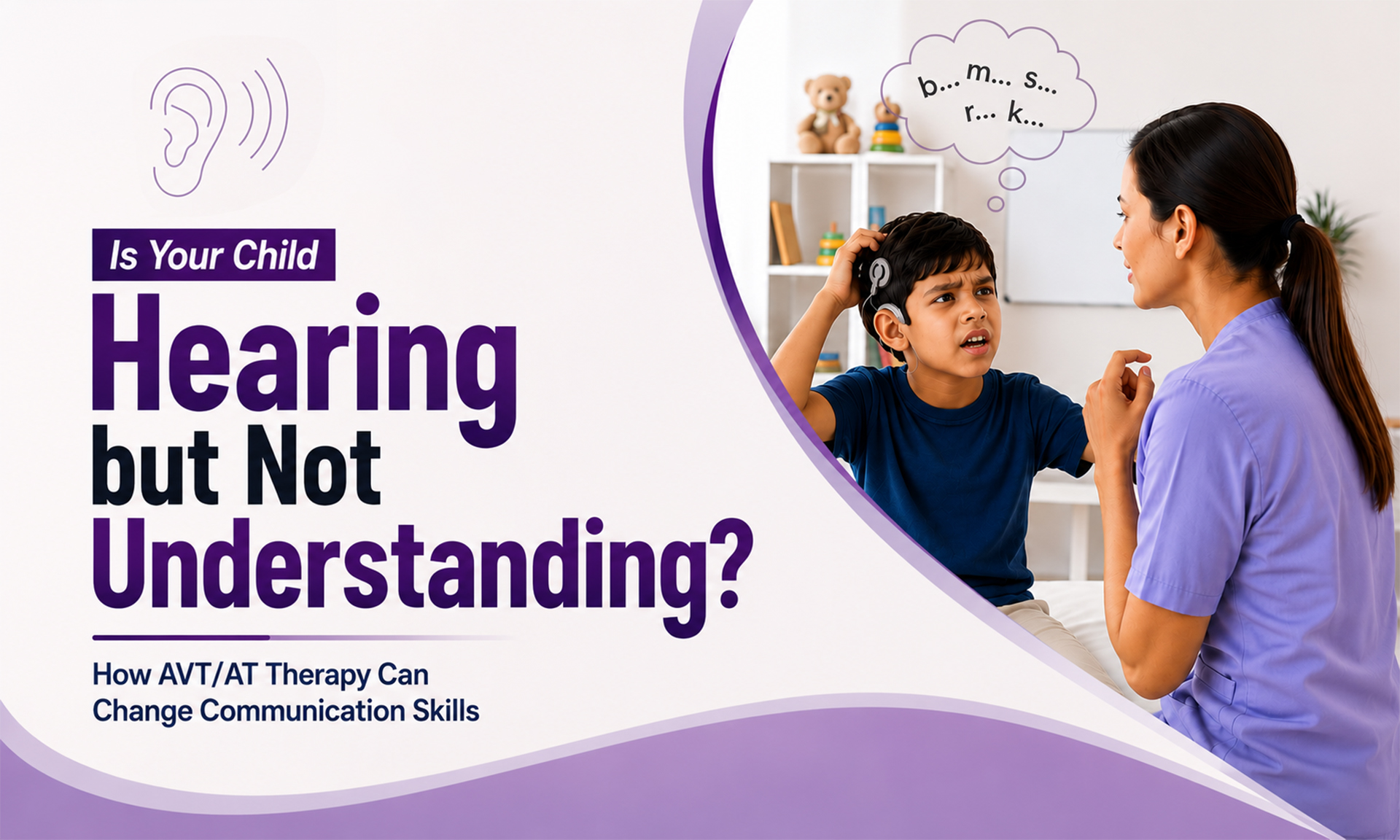
Sometimes children can hear sounds but still struggle to understand words, respond properly, or speak clearly. Parents may notice signs such as delayed speech, poor listening, or difficulty following simple instructions.
These challenges can affect school performance, social interaction, and confidence. The good news is that with the right therapy and early support, many children can successfully improve their listening and speaking abilities.
At SynapCare Rehabilitation Center, AVT and AT therapy programs are designed to help children develop better hearing, listening, speech, and communication skills in a practical and child-friendly way.
What Is AVT Therapy?
Auditory Verbal Therapy (AVT)
Auditory Verbal Therapy helps children learn to listen carefully and develop spoken language using their hearing abilities.
It is commonly recommended for children who:
Have hearing loss
Use hearing aids
Use cochlear implants
Have delayed speech because of hearing difficulties
Instead of depending mostly on lip reading or gestures, AVT teaches children how to use sound and listening to communicate naturally.
Example:
Imagine a child hears the sound of a dog barking but cannot understand what that sound means.
During AVT sessions, the therapist repeatedly helps the child connect:
Sound → Meaning → Response
So gradually:
The barking sound becomes “dog.”
The doorbell sound means “someone is outside.”
Mother’s voice becomes easier to recognize
This helps the child understand speech better in daily life.
What Is Auditory Training (AT)?
Auditory Training improves the brain’s ability to recognize and process sounds correctly.
Some children hear sounds but get confused between similar words.
Example:
A child may not understand the difference between:
“Bat”
“Pat”
“Mat”
Auditory Training helps the brain learn these sound differences through fun listening activities and repetition.
It is also for children with hearing loss :
Focus on speech in noisy places
Improve listening attention
Understand conversations more clearly
Respond faster during communication
At SynapCare Rehabilitation Center, AVT and AT are often combined for better communication improvement.
Why Early Hearing Screening Is Important
Hearing plays a crucial role in a child's speech and language development from birth. That's why newborn hearing screening is recommended for all babies, usually within the first few days after birth. These simple, safe, and painless tests can detect hearing loss even before parents notice any signs.
Early identification allows children to receive the right support, such as hearing aids or cochlear implants (when needed), followed by Auditory Verbal Therapy (AVT) and Auditory Training (AT). Starting intervention in the early years gives children the best chance to develop age-appropriate listening, speech, and language skills without missing the critical language-learning period.
Early hearing screening can help:
Detect hearing loss as early as possible
Begin treatment and therapy without unnecessary delays
Support normal speech and language development
Improve communication, learning, and social skills
Remember: The earlier hearing loss is identified, the sooner therapy can begin, giving your child the best opportunity to develop strong communication skills.
Signs Your Child May Need AVT/AT Therapy
Many parents ignore early signs, thinking the child will “catch up later.” But early therapy can make a huge difference.
Common Signs Include:
The child does not respond when called
Delayed speech development
Difficulty understanding instructions
Unclear pronunciation
Frequently asking "What?"
Poor listening attention
Increasing the TV or mobile volume too much
Difficulty communicating with others
Real Life Example:
A 3-year-old child may only use a few words, like:
“Mama”
“Water”
“Ball”
while children of the same age are speaking in small sentences.
This may indicate the need for a hearing and communication assessment.
How AVT/AT Therapy Sessions Work
Every child is different, so therapy is customized according to the child’s needs and hearing abilities.
1. Sound Awareness And Identification Activities
Children first learn to notice and identify sounds.
Example:
The therapist may use:
Bell sounds
Clapping
Animal sounds
Music toys
Speech Sounds
and encourage the child to identify or react to them.
2. Listening and Understanding Practice
Children learn to connect words with meaning.
Example:
The therapist may give simple verbal instructions, such as:
"Bring the ball."
"Where is the car?"
This improves listening comprehension step by step.
3. Speech Improvement
Therapists help children pronounce words more clearly.
Example:
If a child pronounces a word as:
“Ca” instead of “Car”
The therapist practices correct sound production slowly and repeatedly.
4. Parent Involvement
Parents play a very important role in therapy success.
Families are guided on how to continue listening and speech practice at home naturally during:
Playtime
Mealtime
Story reading
Daily conversation
Example:
Instead of simply giving water, parents are encouraged to ask and model:
“Do you want water?”
“Yes, water, please.”
This increases speaking opportunities throughout the day.
Why Early Therapy Matters
The brain develops listening and language skills fastest during early childhood.
Starting therapy early can help children:
Speak more clearly
Improve school readiness
Build confidence
Communicate socially
Understand speech better
Example:
A child who starts therapy at age 2 often develops communication skills faster than a child who starts much later.
Early intervention gives the brain more time to adapt and learn.
Benefits of AVT/AT Therapy
With regular therapy and family support, many children show major improvement in communication skills.
Children May Improve In:
Listening attention
Vocabulary
Sentence formation
Speech clarity
Classroom participation
Social interaction
Confidence during communication
Real Progress Example:
Some children who initially struggle to speak may later:
Answer questions confidently
Communicate better in school
Participate in group activities
Express emotions and needs more clearly
Why Families Choose SynapCare Rehabilitation Center
At SynapCare, therapy focuses on practical communication improvement in a supportive and caring environment.
Our Approach Includes:
Personalized therapy plans
Child-friendly sessions
Listening and speech-focused activities
Parent guidance and support
Experienced rehabilitation professionals
Structured auditory and speech training
We believe every child deserves the opportunity to communicate confidently and independently.
Help Your Child Build Better Communication Skills
If your child is struggling with listening, hearing, or speech development, early support can lead to life-changing improvements.
Visit SynapCare Rehabilitation Center to learn more about our AVT and Auditory Training programs.
Book a consultation today and take the first step toward stronger listening, clearer speech, and better communication skills for your child.