Autism Awareness vs Acceptance | Building Real Support for Children
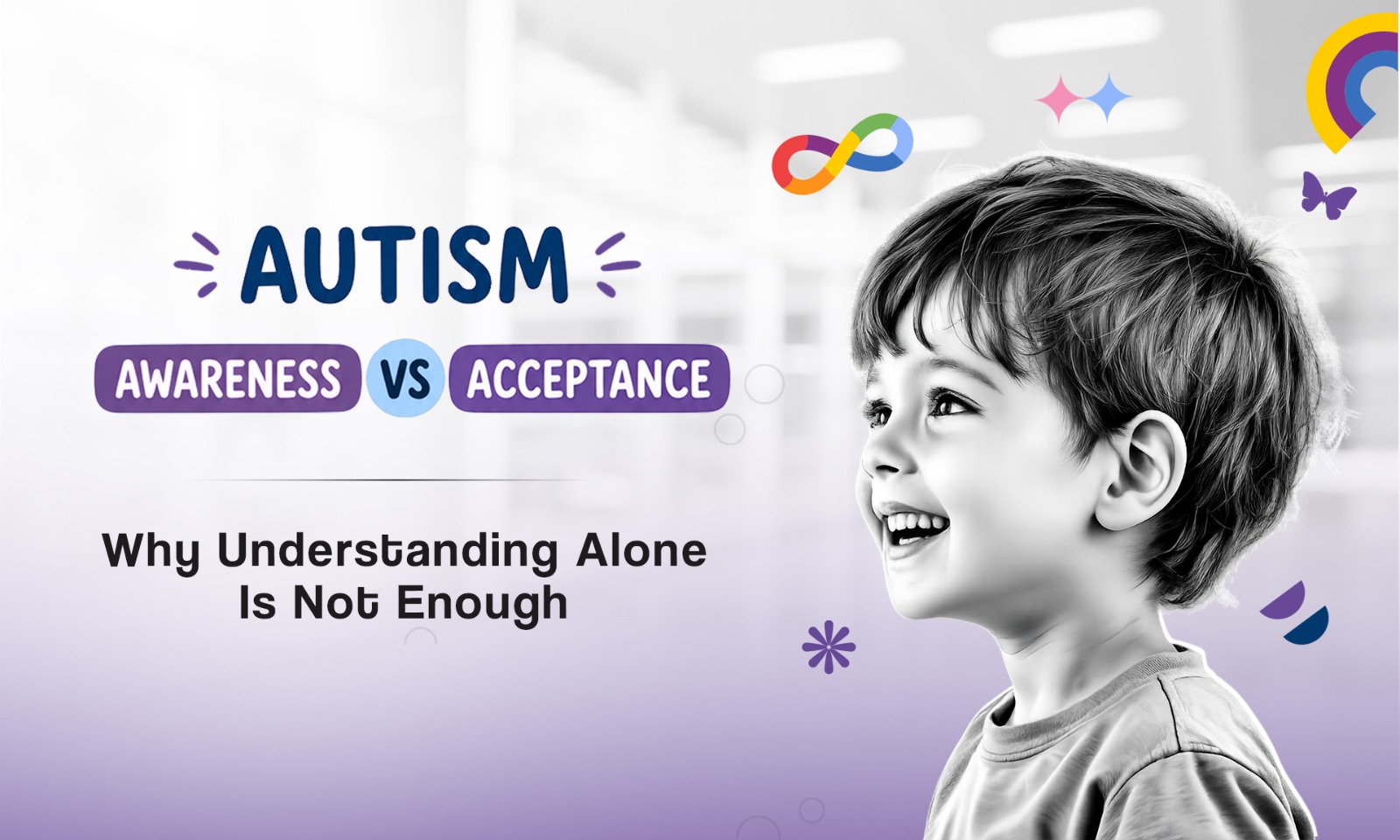
Autism Awareness vs Acceptance: What’s the Real Difference?
Most people today are aware of autism. They know it exists. They may recognise signs like communication differences or challenges with attention.
But awareness alone does not change outcomes.
Acceptance does.
Awareness says: “I know autism exists.”
Acceptance says: “I will adjust, support, and include.”
That change is where the real difference starts.
Why Awareness Falls Short
Awareness often stays at the surface level.
It identifies differences but does not address them in a meaningful way.
For example:
● A child who struggles to communicate may be labeled as “quiet”
● A child with difficulty in social interaction may be seen as “disengaged”
Without deeper understanding, these children are misunderstood rather than supported.
This is where structured therapy plays a critical role. It moves beyond labels and focuses on development.
What Acceptance Actually Looks Like
Acceptance is practical. It changes how adults respond.
Instead of forcing a child to fit a rigid system, acceptance adapts the environment around the child.
It includes:
● Supporting communication in different forms
● Building routines that reduce overwhelm
● Encouraging independent thinking and problem-solving skills
● Giving the child time to process and respond
Acceptance is not lowering expectations. It is setting the right expectations.
The Role of Early Intervention
Early support directly influences long-term outcomes.
A child who receives the right therapy early:
● Develops stronger communication abilities
● Improves focus and attention
● Builds independence through structured learning
For instance, a child who initially avoids interaction can gradually learn to express needs, participate in activities, and engage with others when guided correctly.
This is not instant change. It is consistent, structured progress.
Real Example: Small Changes, Big Impact
Consider a child who struggles to express basic needs.
Without support:
● Frustration increases
● Behavior may be misunderstood
● Social interaction decreases
With the right intervention:
● Communication methods are introduced
● The child begins to express choices
● Confidence improves over time
This is where speech & language therapy becomes essential. It helps bridge the gap between understanding and expression.
Acceptance Builds Long-Term Growth
When children feel understood, they engage more.
Acceptance helps build the following:
● Emotional stability
● Better interaction with others
● Stronger problem-solving skills
● Gradual independence
It also supports emotional well-being, which is often overlooked but critical for development.
Children who feel supported are more willing to try, learn, and adapt.
Moving Forward: From Awareness to Action
Awareness starts the conversation.
Acceptance changes the outcome.
Parents, educators, and Caregivers must:
● Focus on individual strengths
● Provide structured support
● Seek the right intervention early
Because the goal is not to make a child “fit in" –
it is to help them function, grow, and thrive in their own way.
About Synapcare Rehabilitation Center
At Synapcare Rehabilitation Center, we focus on structured, evidence-based approaches that support communication, development, and independence in children across the autism spectrum.
Our goal is simple: move beyond awareness and build real, measurable progress.
For families looking for therapy in Pune, Synapcare provides personalised support tailored to each child’s developmental needs, helping them grow with clarity, structure, and confidence.