Aphasia: Understanding Loss of Words and the Road to Recovery
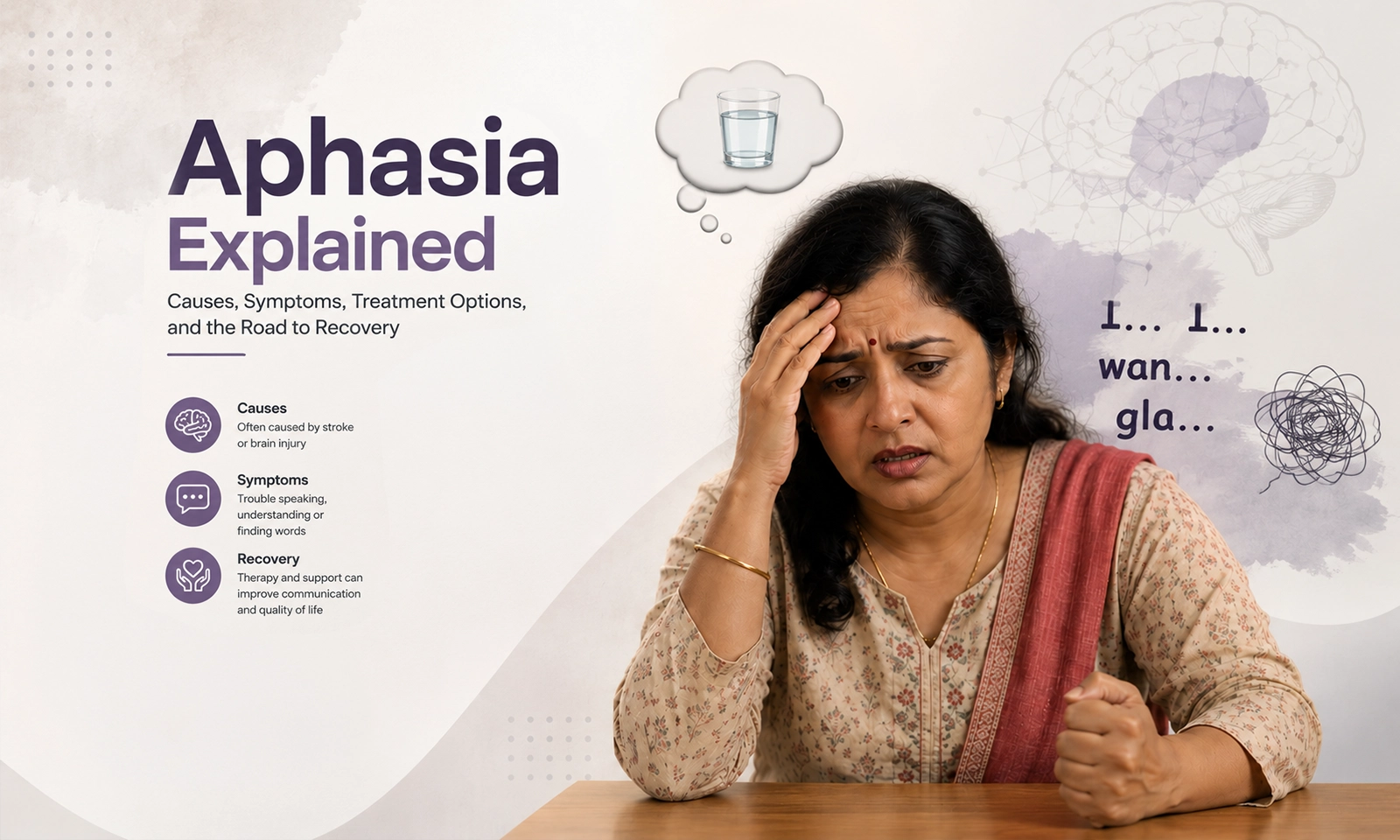
Consider a moment when: You wake up one morning after a stroke and try to ask for a glass of water. You know exactly what you want. You can hear what people are saying around you. But the words simply won't come the way they used to.
That's aphasia. Not a loss of intelligence. Not confusion. Just a disruption in the bridge between what you think and what you can say. The good news? With the right speech & language therapy, meaningful support, and a lot of patience, people do find their way back reconnecting with language, confidence, and the people they love.
What Is Aphasia?
Aphasia is a language disorder, not a thinking problem. It happens when damage in the brain affects the areas that handle understanding and producing language. Depending on where the damage occurs, someone with aphasia might struggle to speak, follow conversations, read, write or some combination of all four.
Stroke is the most common trigger, disrupting blood flow to the language centres of the brain. But aphasia can also result from traumatic brain injuries, brain tumors, or progressive neurological conditions like primary progressive aphasia.
No two cases look the same. The type and severity depend entirely on where the brain was affected and how extensive the damage is.
Recognising the Signs
Aphasia shows up differently in every person. Some of the most common signs include:
Struggling to find the right word mid-sentence
Speaking in short, broken phrases rather than full sentences
Using the wrong word without realising it saying "table" when they mean "chair"
Finding it hard to follow conversations, particularly in noisy environments
Difficulty reading or writing, even simple, familiar words
One distinction worth knowing: aphasia is not the same as dysarthria. Dysarthria affects the muscles used to physically produce speech so someone might slur words but can still find them. With aphasia, it's the language itself retrieval, comprehension, expression that's disrupted.
Treatment Options That Actually Help
Can aphasia improve? In many cases, yes especially when treatment starts early and continues consistently.
The cornerstone of recovery is speech and language therapy. A trained therapist works to identify exactly where communication is breaking down, then builds a personalised plan around those specific challenges.
Depending on the person, therapy might include:
Word retrieval exercises rebuilding the pathways between thought and the right word
Conversation practice rebuilding real-world communication, one interaction at a time
Reading and writing activities scaled carefully to where the person currently is, not where they were before
Cognitive exercises supporting attention, memory, and problem-solving skills that underpin communication
Technology is expanding what's possible. Communication apps, digital practice tools, and online therapy sessions are making consistent support more accessible than ever. Group therapy adds another layer not just practice, but the emotional grounding that comes from being with others who genuinely understand.
The Road to Recovery
Recovery from aphasia isn't a straight line. Some days show real progress. Others feel like standing still. Both are part of the process and every small step genuinely counts.
Consistent therapy, steady emotional support, and regular practice form the backbone of rebuilding communication. Family members and caregivers play a bigger role than they often realise. Speaking slowly, using gestures naturally, and simply giving enough time for a response without rushing or finishing sentences can make daily life feel far less frustrating.
Aphasia can affect self confidence. Staying connected to family, friends, and daily activities supports people and helps them regain something just as important as language: self-awareness. With the right support and persistence, many people continue to make meaningful progress long after the initial injury.
Finding the Right Support
How does speech therapy help with aphasia? It helps rebuild communication skills by training the brain to create new language pathways and strengthen existing ones. The brain can adapt and continue improving , and is much more adaptable than most people expect.
For families looking into therapy in Pune, working with a qualified speech language pathologist can make a real difference. Personalised assessment, clear goal setting, and structured consistency are what drive real recovery not generic exercises or one-size-fits-all programmes.
A Final Word
Aphasia changes how someone communicates. It doesn't change who they are.
With the right therapy, a strong support system, and realistic patience, progress is absolutely possible one word at a time, one conversation at a time, one moment of real connection at a time.
If you or someone you love is navigating life with aphasia, reaching out for expert support early isn't just helpful, it's one of the most important steps toward finding your way back.